Refrigerants and Climate: F-Gases and Natural Alternatives
How refrigerants affect climate, what the Kigali Amendment and EU F-gas Regulation 2024/573 require, and how natural refrigerants compare on GWP and safety.
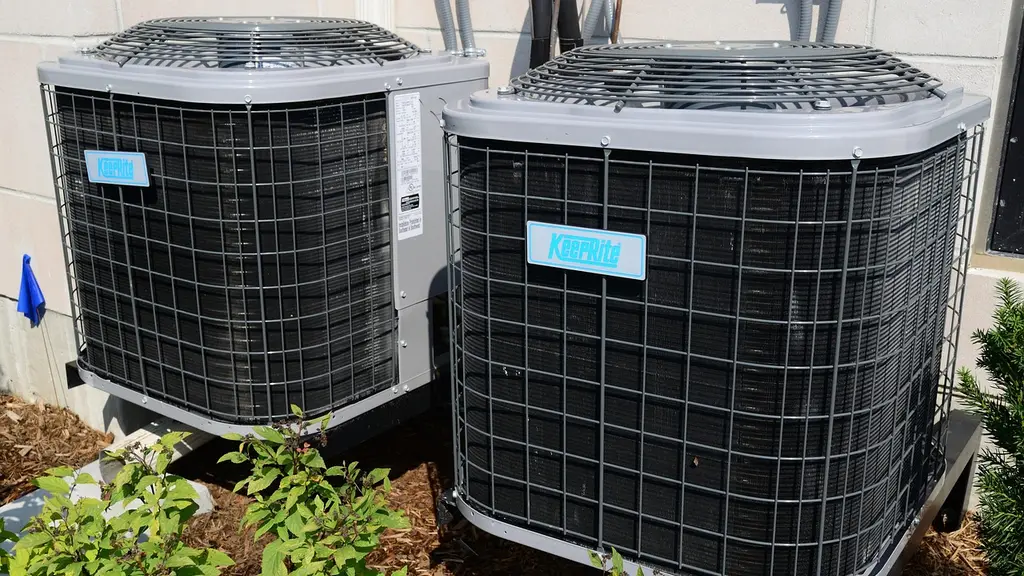
Every heat pump, chiller, supermarket cabinet and car air-conditioning system depends on a working fluid that boils and condenses at useful temperatures. For decades the industry's preferred fluids were synthetic fluorinated compounds. They were efficient, stable, non-flammable and, as it turned out, extremely potent greenhouse gases when they leak.
Refrigerant choice is now one of the most consequential climate decisions in building services and cooling. This article explains how refrigerants affect the climate directly and indirectly, traces the regulatory path from the Montreal Protocol to the EU's 2024 F-gas Regulation, compares common refrigerants on global warming potential and safety class, and works through a lifetime emissions example.
Two routes to climate impact
A refrigeration or heat pump system affects the climate in two ways:
- Direct emissions arise when refrigerant escapes through leaks, servicing losses, accidents and poor recovery at end of life. Their impact is the mass released multiplied by the refrigerant's global warming potential (GWP).
- Indirect emissions come from generating the electricity that drives the compressor. They depend on system efficiency and the emission factor of the electricity supply.
The two are combined in the total equivalent warming impact (TEWI) concept:
TEWI = (GWP × L × n) + (GWP × m × (1 − α)) + (E × β × n)
where L is annual leakage (kg/year), n is the operating life (years), m is the charge (kg), α is the end-of-life recovery fraction, E is annual electricity use (kWh/year) and β is the electricity emission factor (kg CO₂/kWh). A fuller lifecycle metric (LCCP) also counts refrigerant manufacture and equipment materials.
The implication matters: a low-GWP refrigerant that makes a system markedly less efficient can lose part of its advantage through higher indirect emissions. Good design aims for low GWP and high efficiency together.
From ozone protection to climate protection
The Montreal Protocol (1987) phased out chlorofluorocarbons (CFCs) and then hydrochlorofluorocarbons (HCFCs) to protect the ozone layer. Their main replacements, hydrofluorocarbons (HFCs), do not deplete ozone but many have GWPs in the thousands.
The Kigali Amendment to the Montreal Protocol, adopted on 15 October 2016 and in force since 1 January 2019, brought HFCs under the Protocol and set a phase-down schedule. Developed countries started cutting in 2019 and step down to 15% of baseline from 2036. Most developing countries froze consumption in 2024, with a smaller group following in 2028. UNEP estimates the amendment could avoid up to about 0.4 °C of warming this century.
The EU has gone further. Regulation (EU) 2024/573 on fluorinated greenhouse gases entered into force on 11 March 2024, replacing the 2014 regulation. It sets a quota system that phases out HFC production and consumption completely by 2050. It also places prohibitions on F-gases in specific new equipment, with dates depending on the equipment type and capacity. For example:
- Self-contained (monoblock) air conditioners and heat pumps up to 12 kW: F-gases with a GWP of 150 or more are prohibited from 2027, and all F-gases from 2032, with exceptions where safety requirements cannot otherwise be met.
- Split air conditioners and heat pumps up to 12 kW: all F-gases are prohibited from 2035, with earlier GWP limits depending on configuration and safety exceptions.
The regulation also tightens leak-checking, certification and recovery obligations. Product-specific dates and exemptions are detailed, so designers should always check the consolidated text on EUR-Lex.
Comparing common refrigerants
The table gives 100-year GWP values as used in Regulation (EU) 2024/573: HFCs and HFC blends take values from the IPCC Fourth Assessment Report (AR4), while HFOs, hydrocarbons and other substances take Sixth Assessment Report (AR6) values. Corporate carbon inventories often use AR6 values throughout, which are higher for most HFCs (for example, about 2,256 for R-410A). It also gives the safety class under ISO 817 / ASHRAE 34, where the letter indicates toxicity (A lower, B higher) and the number indicates flammability (1 none, 2L lower, 3 higher).
| Refrigerant | Type | GWP (100-yr) | Safety class | Typical uses |
|---|---|---|---|---|
| R-404A | HFC blend | 3,922 | A1 | Legacy commercial refrigeration |
| R-410A | HFC blend | 2,088 | A1 | Legacy split air conditioning and heat pumps |
| R-134a | HFC | 1,430 | A1 | Chillers, legacy mobile air conditioning |
| R-32 | HFC | 675 | A2L | Split air conditioning, heat pumps |
| R-1234yf | HFO | below 1 | A2L | Car air conditioning, some chillers |
| R-290 (propane) | Hydrocarbon | 0.02 | A3 | Monoblock heat pumps, plug-in cabinets |
| R-744 (CO₂) | Natural | 1 | A1 | Supermarket racks, heat pump water heaters |
| R-717 (ammonia) | Natural | 0 | B2L | Industrial refrigeration, large chillers |
Every low-GWP option involves a trade-off:
- Hydrocarbons such as propane are excellent thermodynamically but highly flammable. Charge limits and ventilation requirements, set in standards such as EN 378, are central to design.
- CO₂ is non-flammable and non-toxic at normal concentrations, but its critical temperature is only about 31 °C. Systems often operate transcritically at high pressures. With good design, including ejectors, parallel compression and heat recovery, CO₂ systems perform well even in warm climates.
- Ammonia is very efficient and has zero GWP but is toxic. It is long established in industrial plant with trained operators and is increasingly used in large chillers with low charges.
- HFOs (hydrofluoroolefins) have very low GWPs and are mildly flammable. Some break down in the atmosphere to trifluoroacetic acid (TFA), a persistent substance. HFOs and TFA fall within broad definitions of PFAS, which European regulators are currently examining. That regulatory uncertainty matters for equipment expected to run for 15 years or more.
Worked example: direct against indirect emissions
Consider an illustrative 10 kW air-to-water heat pump. All figures are invented for teaching, and the GWPs are the F-gas Regulation values from the table above.
Option 1: R-410A
- Charge m = 5 kg; leakage L = 5% of charge per year = 0.25 kg/year; life n = 15 years; recovery α = 80%
- Direct (leakage): 2,088 × 0.25 × 15 = 7,830 kg CO₂e
- Direct (end of life): 2,088 × 5 × 0.2 = 2,088 kg CO₂e
- Indirect: 8,000 kWh/year × 0.2 kg/kWh × 15 = 24,000 kg CO₂
- TEWI ≈ 33.9 t, of which direct emissions are about 9.9 t (29%)
Option 2: R-290, same efficiency
- Charge m = 2 kg; leakage 0.1 kg/year; same life and recovery
- Direct: 0.02 × 0.1 × 15 + 0.02 × 2 × 0.2 ≈ 0.04 kg CO₂e
- Indirect: 24,000 kg CO₂
- TEWI ≈ 24.0 t, with direct emissions negligible
Switching refrigerant removes almost a third of lifetime emissions in this case. The indirect share then dominates, which keeps efficiency, controls and clean electricity at the centre of the story. On a fully decarbonised grid, direct emissions from a high-GWP refrigerant would be nearly the whole footprint. For design guidance on the systems themselves, see heat pumps explained. Large cooling users such as data centres and airport terminals face the same trade-offs at a larger scale.
Leakage: the overlooked operational issue
Even before replacing equipment, operators can cut direct emissions substantially:
- Keep an accurate register of every system's refrigerant type and charge.
- Carry out leak checks at the intervals required by the F-gas Regulation, and fit automatic leak detection where required or justified.
- Record every top-up. Top-ups are a direct measure of leakage and belong in the organisation's Scope 1 inventory (see Scope 1, 2 and 3 emissions).
- Repair leaks promptly and verify the repair.
- Recover refrigerant fully at decommissioning, using certified personnel and reclaim routes.
Safety: refrigerant work must only be carried out by appropriately certified technicians. Flammable refrigerants (A2L and A3) require specific charge limits, ventilation, ignition-source control and tools. CO₂ systems operate at high pressures, and ammonia is toxic. Follow EN 378 or the applicable national standard and the manufacturer's instructions.
Decision checklist for new projects
- Check which F-gas Regulation prohibitions apply to the equipment type, capacity and installation date.
- Shortlist natural refrigerants first, and justify any HFC or HFO choice against safety or technical constraints.
- Compare options on lifecycle emissions (TEWI or LCCP), not GWP alone, using realistic leakage and efficiency figures.
- Confirm the site can meet the safety requirements for the chosen refrigerant class, including room volume, ventilation and access.
- Make sure qualified service technicians for that refrigerant are available locally.
- Plan for monitoring, leak detection and end-of-life recovery from day one.
The next generation of cooling and heat pump equipment can have a refrigerant footprint close to zero. Getting there depends on regulation, but just as much on careful design, competent installation and disciplined maintenance. Use the carbon savings calculator to put the indirect side of the equation into numbers.
References
- Regulation (EU) 2024/573 on fluorinated greenhouse gases. EUR-Lex
- The Kigali Amendment (2016): the amendment to the Montreal Protocol agreed by the Twenty-Eighth Meeting of the Parties. UNEP Ozone Secretariat
- Fluorinated greenhouse gases. European Commission, Directorate-General for Climate Action
- AR6 Climate Change 2021: The Physical Science Basis. Intergovernmental Panel on Climate Change