Sustainable Urban Infrastructure: Principles and Practice
How lifecycle thinking, efficiency-first design, system integration and resilience turn urban networks for water, heat, power and mobility into durable assets.

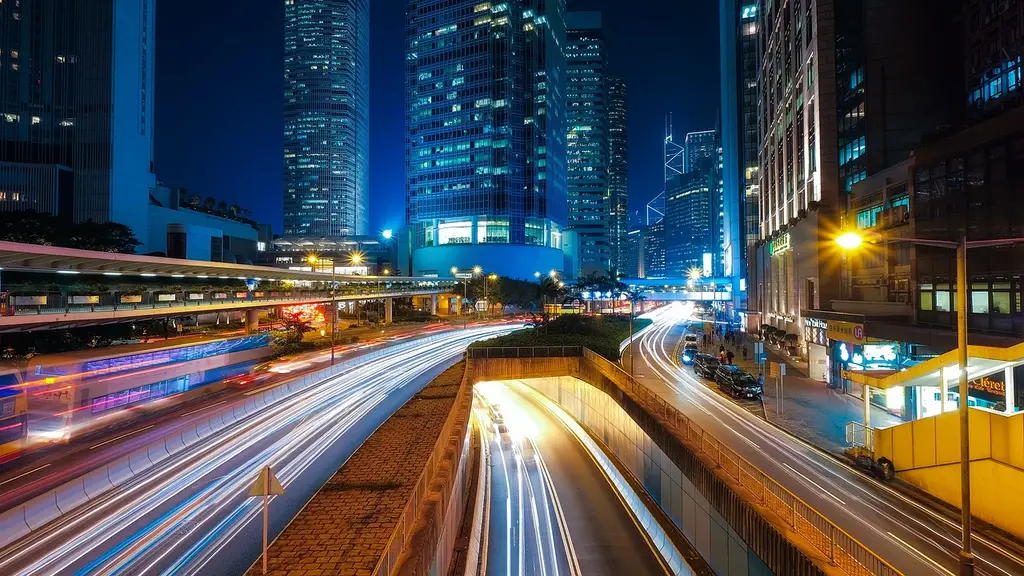
Most of the infrastructure a city will rely on in 2060 is either already in the ground or about to be designed. Water mains, sewers, heat networks, substations, roads and rail lines routinely stay in service for 40 to 100 years, which means a decision taken at a design review this year quietly fixes energy use, emissions and maintenance costs for generations of users who were never consulted.
That long tail is why "sustainable infrastructure" is more than a label for green add-ons. It is a discipline of making decisions over the whole life of an asset, across the boundaries between systems, and under a climate that is changing during the asset's service life. The IPCC's Sixth Assessment Report attributes a large majority of global carbon dioxide and methane emissions to urban areas once consumption is counted, so the way cities build and run their networks matters at planetary scale.
This article sets out the principles that separate genuinely sustainable infrastructure from conventional practice, shows how they translate into engineering decisions, and works through a lifecycle cost comparison that illustrates why the cheapest option at tender is often the most expensive one to own.
Five principles that hold up in practice
Frameworks from UNEP, development banks and national infrastructure commissions differ in wording, but most converge on a small set of ideas. Five of them do most of the work.
1. Think in lifecycles, not capital budgets. Operating energy, maintenance, renewal and end-of-life treatment usually dwarf construction cost for energy-using assets such as pumping stations, lighting and building services. For low-energy assets like bridges or pipes, the balance shifts towards embodied carbon in materials. Either way, the decision metric should cover the whole service life.
2. Efficiency first. The European Union has written the "energy efficiency first" principle into law: before investing in new supply capacity, planners should consider whether demand-side measures could deliver the same service at lower cost. In infrastructure terms, that means reducing leakage before building a new reservoir, insulating buildings before oversizing a heat network, and dimming streetlights before upgrading feeders.
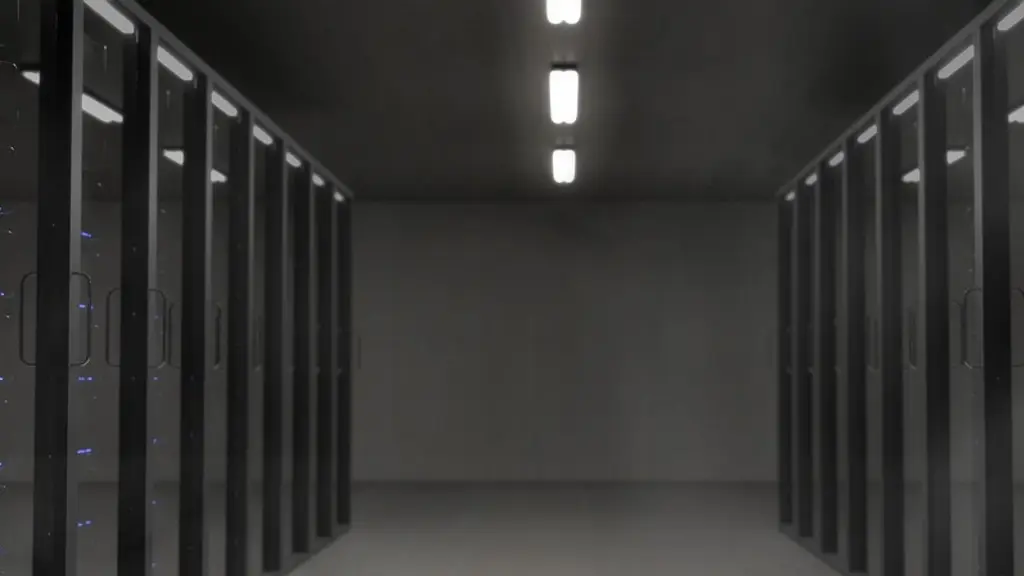
3. Integrate systems. Urban networks are coupled. Wastewater carries heat that can feed heat pumps; data centres reject heat that a district network can use; electric buses add load to the same grid that serves homes. Designing each system in isolation wastes these synergies and sometimes creates conflicts, such as two utilities digging the same street in successive years.
4. Design for resilience and adaptation. Assets must perform under the climate of their final decades, not the climate of their commissioning year. Flood levels, peak temperatures and drought frequency belong in the design brief.
5. Keep options open. Modular capacity, oversized ducts, and space reserved for future plant cost little at construction and avoid expensive retrofits when technology or demand changes.
A useful test: for any infrastructure proposal, ask what it will cost to operate in year 25, what it will be connected to, and what happens to it when demand is half or double the forecast. Weak proposals struggle with all three questions.
Where energy and emissions sit in urban networks
Different networks have very different profiles. The table below summarises where the main sustainability levers usually lie. It is a qualitative guide rather than a ranking, because the balance varies with climate, density and local energy prices.
| Network | Dominant impact over life | Typical efficiency levers | Integration opportunities |
|---|---|---|---|
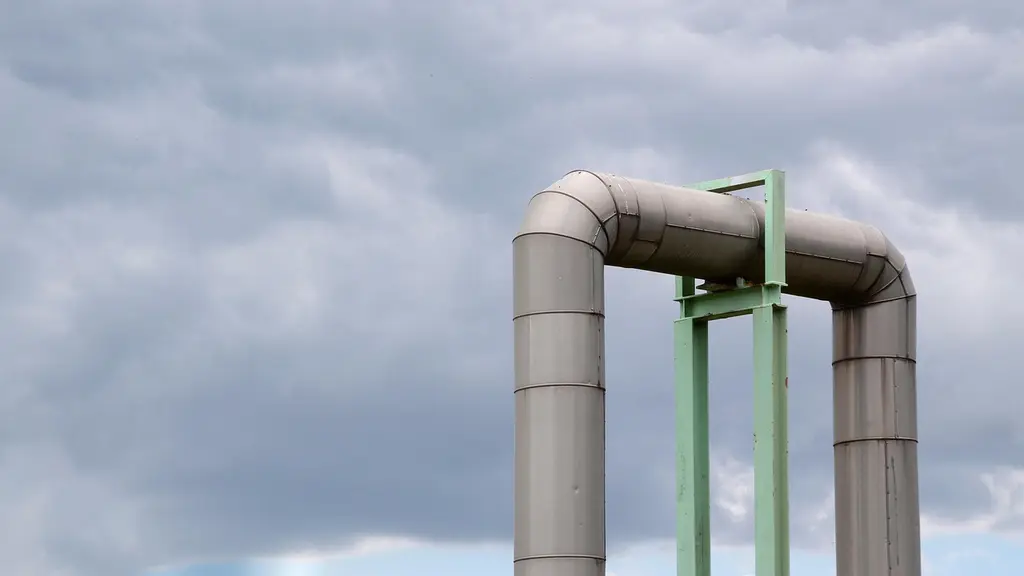
| Water supply | Pumping energy, leakage | Pressure management, leak detection, efficient pumps | Hydropower recovery in pressure-reducing stations |
| Wastewater | Aeration energy, process emissions | Aeration control, sludge digestion, biogas use | Heat recovery from sewers, biogas to grid or CHP |
| Heating and cooling | Fuel and electricity for heat | Lower network temperatures, insulation, heat pumps | Waste heat from industry and data centres |
| Street lighting | Electricity | LEDs, adaptive dimming, central management | Sensor platforms for traffic and air quality |
| Roads and rail | Embodied carbon, vehicle energy | Durable pavements, regenerative braking, signal timing | Charging infrastructure, cycling networks |
| Power distribution | Losses, peak capacity | Voltage optimisation, demand flexibility | Storage, vehicle charging, local generation |
Several of these deserve their own treatment. Our articles on district heating and cooling networks, the water–energy nexus and efficient street lighting go deeper into individual systems.
Lifecycle cost: the arithmetic behind good decisions
Lifecycle cost (LCC) analysis brings future operating costs back to present value so they can be compared with capital cost on equal terms:
LCC = C0 + Σt=1…N (Et + Mt + Rt) / (1 + r)t − SN / (1 + r)N
where C₀ is the initial capital cost, E, M and R are energy, maintenance and replacement costs in year t, r is the real discount rate, N the analysis period and S the residual value at the end of it.
When annual costs are constant, the sum simplifies using the annuity factor:
AF = [1 − (1 + r)−N] / r
Worked example: a booster pumping station
Consider an illustrative water booster station with two design options, each meeting the same flow and head requirements. Maintenance costs are assumed equal and residual values ignored.
- Option A uses standard pump sets throttled by valves. Capital cost €120,000; annual electricity 400 MWh.
- Option B uses high-efficiency motors with variable-speed drives and impellers matched to the actual duty. Capital cost €165,000; annual electricity 300 MWh.
Assume electricity at €0.18/kWh, a 4% real discount rate and a 20-year analysis period.
- Annuity factor: AF = [1 − 1.04−20] / 0.04 = (1 − 0.4564) / 0.04 ≈ 13.59.
- Annual energy cost: A = 400,000 × 0.18 = €72,000; B = 300,000 × 0.18 = €54,000.
- Present value of energy: A = 72,000 × 13.59 ≈ €978,500; B = 54,000 × 13.59 ≈ €733,900.
- LCC: A ≈ €1,098,500; B ≈ €898,900.
Option B costs €45,000 more at tender but saves roughly €200,000 in present-value terms, with a simple payback of 45,000 / 18,000 = 2.5 years. Energy accounts for nearly 90% of Option A's lifecycle cost, which is typical of continuously running motor-driven plant. A procurement rule that rewards the lowest capital bid would have selected the worse option.
The same logic can be extended to carbon by multiplying annual energy by an emission factor (ideally one that declines as the grid decarbonises) and adding embodied emissions. A spreadsheet is enough for a first estimate, while a full lifecycle assessment is needed when materials dominate.
Embodied carbon and the materials question
For assets that consume little energy in use, such as pipes, culverts, bridges and retaining walls, the largest climate impact arrives on day one in the form of cement, steel and asphalt. Here the levers are different:
- Build less, or build smarter. Reusing existing structures, strengthening rather than replacing, and challenging over-specified design loads often save more carbon than any material substitution.
- Specify lower-carbon materials. Blended cements, recycled aggregates and steel from electric arc furnaces can cut embodied emissions, provided durability is demonstrated for the exposure conditions.
- Design for long life and disassembly. A structure that lasts 100 years instead of 50 halves its embodied carbon per year of service, and bolted connections make future reuse possible.
The tension between durability and low-carbon materials is real. A cheaper, lower-carbon mix that cracks after 20 years is not sustainable. Material choices need testing against realistic exposure, not just a carbon figure on a datasheet.
Resilience: designing for the climate of 2080
An asset commissioned in 2027 with a 60-year life will operate into the late 2080s. Several practical steps help:
- Use climate projections, not historical records, for design temperatures, rainfall intensities and flood levels. Many national design codes now provide climate-adjusted values or uplift factors.
- Map interdependencies. A flooded substation can disable pumping stations, traffic signals and telecoms at once. Cascading failure analysis identifies which assets deserve extra protection.
- Prefer graceful degradation. Networks with redundancy, looped topology and local storage keep partial service when individual elements fail.
- Combine grey and green measures. Sustainable drainage, permeable surfaces and urban trees reduce runoff and heat, and complement conventional pipes and pumps rather than replacing them.
Hot climates add specific stresses on materials, power equipment and people, discussed in our piece on designing infrastructure for hot climates.
From principles to procurement
Principles only change outcomes when they reach contracts. The gap between policy and practice usually opens at three points.
Business cases. If appraisal guidance uses short analysis periods or high discount rates, operating savings beyond year ten effectively vanish. Asset owners should state the analysis period and discount rate explicitly and run sensitivity tests on energy prices.
Tender evaluation. Award criteria can include lifecycle cost, guaranteed energy performance and embodied carbon, with penalties if guaranteed values are not met in operation. Without such clauses, bidders compete on capital cost alone.
Operation and data. Many assets underperform because nobody measures them after handover. Metering, commissioning and periodic performance review should be budgeted from the start. The same disciplines used in buildings, such as baselining and measurement and verification of savings, apply equally to pumping stations and lighting networks.
A practical checklist for project teams
Before a design is frozen, a project team can check:
- Has a lifecycle cost been calculated over the realistic service life, with energy price and carbon sensitivities?
- Have demand-reduction options been tested before sizing new supply capacity?
- Are interfaces with neighbouring networks (heat, power, water, mobility) identified, and are synergies captured or at least kept possible?
- Do design values for temperature, rainfall and flood levels reflect projected rather than historical climate?
- Is embodied carbon estimated, and have reuse or lighter-weight alternatives been considered?
- Are metering, monitoring and performance verification specified and funded?
- Does the contract reward operating performance, not just delivery on time and budget?
Sustainable infrastructure rarely depends on exotic technology. It depends on asking these questions early, when changing a line on a drawing costs almost nothing, rather than in year 15, when the only remaining option is an expensive retrofit.
References
- Climate Change 2022: Mitigation of Climate Change (Working Group III, Chapter 8: Urban systems). Intergovernmental Panel on Climate Change
- International Good Practice Principles for Sustainable Infrastructure. United Nations Environment Programme
- Energy efficiency first principle. European Commission
- Energy Efficiency 2024. International Energy Agency