Efficient Street Lighting: LEDs, Controls and Dark Skies
How LED luminaires, adaptive controls and careful optics cut street lighting energy, how EN 13201-5 indicators measure performance, and how to limit glare.
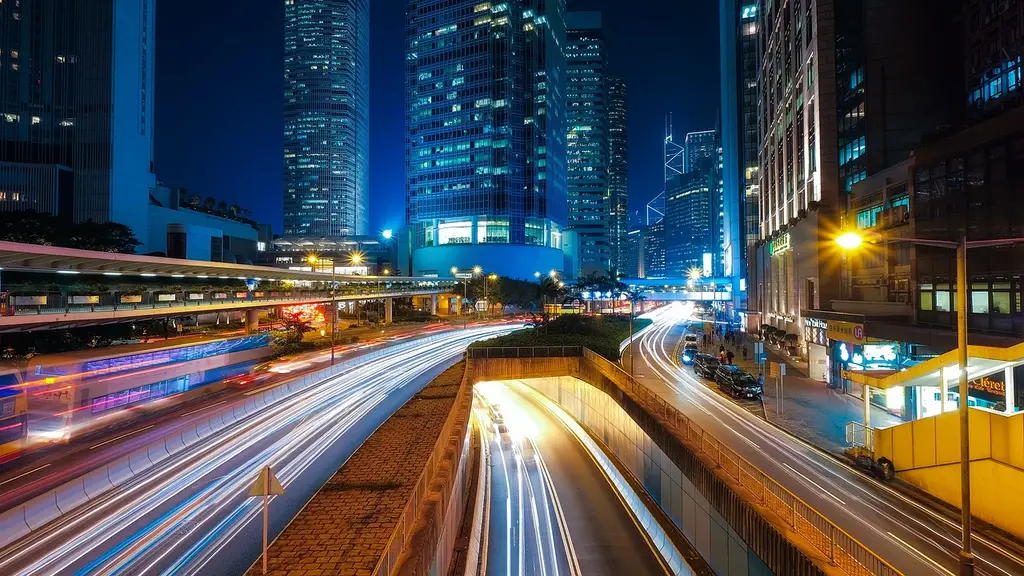
Street lighting is one of the few energy loads that a municipality owns outright, operates every night of the year and can change without asking residents to alter their behaviour. It is also highly visible: a poorly planned retrofit can produce harsh glare and complaints, while a good one can halve energy use, improve visibility and reduce light spilling into bedrooms and the night sky.
The technology shift is largely complete in principle. Light-emitting diodes (LEDs) now outperform high-pressure sodium and metal halide lamps in efficacy, controllability and lifetime. But the quality of the outcome depends on decisions about optics, colour temperature, lighting levels and controls, not just the choice of LED.
This article explains where the energy savings come from, how European standards define performance, how to estimate savings for a retrofit, and how to reconcile efficiency with dark-sky protection.
Why LEDs changed the economics
Three properties make LED luminaires attractive for roads and public spaces.
Directional light. A sodium lamp radiates in all directions and relies on a reflector to redirect light towards the road, losing some in the process. LED arrays combined with lens optics place light where it is needed, so fewer lumens are wasted on verges, facades and the sky.
Controllability. LEDs can be dimmed smoothly and switched instantly without the warm-up and restrike delays of discharge lamps. This makes adaptive lighting practical.
Long life. Well-designed LED luminaires maintain useful output for many years, reducing the cost and traffic disruption of lamp replacement. Driver electronics and thermal management, rather than the LEDs themselves, often determine real-world life.
Luminaire efficacy (lumens delivered per watt drawn from the supply) is the fair comparison metric, because it includes optical, thermal and driver losses. Lamp-only figures overstate the performance of older technologies, which lose a considerable share of output inside the luminaire.
Lighting classes and the energy indicators in EN 13201
In Europe, road lighting design is guided by the EN 13201 series. Part 2 sets performance requirements in lighting classes:
- M classes for motorised traffic routes, specified mainly by road surface luminance, uniformity and glare limits
- C classes for conflict areas such as junctions and roundabouts, specified by illuminance
- P classes for pedestrian and low-speed areas, specified by horizontal illuminance
Part 5 defines two energy performance indicators that let designers compare solutions for the same road.
The power density indicator (PDI) measures how much power is needed per unit of illuminance and area:
DP = P / Σ (Ēi · Ai) [W/(lx·m²)]
where P is the system power of the installation, Ēi the maintained average horizontal illuminance on sub-area i, and Ai the area of that sub-area.
The annual energy consumption indicator (AECI) captures operation over a year, including dimming:
DE = Σ (Pj · tj) / A [kWh/(m²·year)]
where Pj is the power in operating period j, tj its duration and A the lit area.
They are, in effect, energy performance indicators tailored to lighting. The standard is explicit that they are meant to compare alternative designs for the same project. Comparing roads with different geometry or lighting classes using PDI alone can mislead.
Do not over-light. The cheapest kilowatt-hour is the one not used. Many legacy installations deliver more light than their lighting class requires, either because the class was never reviewed or because new lamps start well above their maintained output. Confirming the correct class is often the first saving.
Controls: from timers to adaptive lighting
Energy savings from controls stack on top of the LED retrofit. Common strategies are summarised below.
| Strategy | How it works | Typical application |
|---|---|---|
| Photocell or astronomical clock | Switches on at dusk and off at dawn, without daylight waste | All installations; baseline requirement |
| Fixed dimming profile | Programmed reduction in output during low-traffic hours | Residential streets, distributor roads |
| Constant light output (CLO) | Starts below full power and increases drive current as LEDs age | Avoids over-lighting during early life |
| Presence or traffic-adaptive dimming | Sensors raise output when vehicles, cyclists or pedestrians are detected | Paths, car parks, low-traffic roads |
| Central management system | Networked luminaires report faults and energy use; profiles adjusted remotely | Larger municipal networks |
Central management systems also deliver operational value. Automatic fault reporting replaces night-time scouting patrols, and measured energy data can replace estimated consumption in billing arrangements where utilities and regulators permit it. The same networks can host smart sensors for traffic counting or air quality, although each use case should justify its cost and data-governance requirements; see our discussion of urban data platforms.
Worked example: retrofitting one kilometre of road
Consider an illustrative 1 km residential distributor road, 7 m wide, lit by 30 luminaires. Assume about 4,100 burning hours per year, which corresponds to an average of roughly 11.2 hours per night in a mid-latitude European city.
Existing installation: high-pressure sodium, 150 W lamps; with ballast losses, assume 170 W per luminaire.
- Annual energy = 30 × 170 W × 4,100 h ≈ 20,900 kWh
LED retrofit at full power: assume 70 W per luminaire, meeting the same lighting class.
- Annual energy = 30 × 70 W × 4,100 h ≈ 8,600 kWh (a 59% reduction)
LED with dimming: reduce to 50% output for 6 hours in the middle of each night, assuming power falls in proportion (real drivers may differ slightly).
- Average power = 70 × (5.2 h × 1.0 + 6 h × 0.5) ÷ 11.2 h ≈ 51 W
- Annual energy = 30 × 51 W × 4,100 h ≈ 6,300 kWh, about 70% below the original
The lit area is 7,000 m², so the AECI falls from about 3.0 to about 0.9 kWh/(m²·year). At an electricity price of €0.20/kWh, the saving is roughly €2,900 per year for this kilometre, before counting reduced maintenance. Retrofit costs vary widely with whether columns, cabling and control nodes need replacement, so payback must be calculated case by case.
Dark skies, colour temperature and ecology
Efficient lighting and dark-sky protection are compatible, but only if they are designed together. Three parameters matter most.
Upward light. Luminaires mounted horizontally with flat glass and no upward light output avoid direct contributions to sky glow. Tilting luminaires to reach wider roads can reintroduce upward light, so optics should be chosen to avoid tilt.
Correlated colour temperature (CCT). Early LED retrofits often used 4,000 K or higher, which appears bluish-white. Blue-rich light scatters more in the atmosphere and has stronger effects on circadian systems and many nocturnal species. In 2016 the American Medical Association recommended that outdoor lighting, particularly street lighting, should not exceed 3,000 K, and should be properly shielded; DarkSky International promotes similar limits. Warmer LEDs are slightly less efficacious, but the penalty is now small.
Light levels and timing. Dimming late at night reduces energy and light pollution at the same time. Near sensitive habitats, such as rivers used by bats, designers may specify amber spectra, part-night operation or no lighting at all.
Glare is a safety issue as well as a comfort issue. High-luminance LED sources viewed directly can reduce visibility for drivers and pedestrians. Specify luminaires with appropriate glare classifications and check designs with photometric software, not just wattage tables.
Procurement and planning checklist
When planning a street lighting programme, municipalities can work through these steps:
- Inventory every luminaire, column and feeder pillar, including lamp type, wattage, age and condition.
- Review lighting classes road by road, applying EN 13201 or the national equivalent and local risk assessment.
- Specify on performance, using luminaire efficacy, photometric files, CCT, glare classification and upward light output, plus driver lifetime and warranty terms.
- Design with software to confirm the lighting class is met at the specified maintenance factor, and compare designs using PDI and AECI.
- Choose controls that match the street's use, from fixed dimming profiles to central management where the network is large enough to justify it.
- Engage residents before installation, especially on colour temperature and light trespass.
- Verify after installation by spot measurements and metered energy data.
Key takeaways
- LEDs reduce street lighting energy mainly through better optics and efficacy; controls typically add a further substantial reduction.
- EN 13201-5's power density and annual energy indicators provide a fair way to compare designs for the same road.
- Constant light output and dimming profiles prevent over-lighting both early in life and late at night.
- Warm CCT, zero upward light and appropriate glare control make efficiency compatible with dark skies and ecology.
Street lighting sits at the intersection of energy, safety and urban design. Treated as part of a broader approach to sustainable urban infrastructure, a lighting retrofit can be one of the quickest wins available to a city.
References
- Solid-State Lighting. US Department of Energy
- DarkSky International. DarkSky International
- International Commission on Illumination (CIE). CIE
- The next wave of LED lighting: Smarter, circular and more efficient. International Energy Agency