Open Data in Energy Research
Why open data and code matter in energy research, how the FAIR principles apply, key public datasets, licensing and privacy, and a data-sharing checklist.
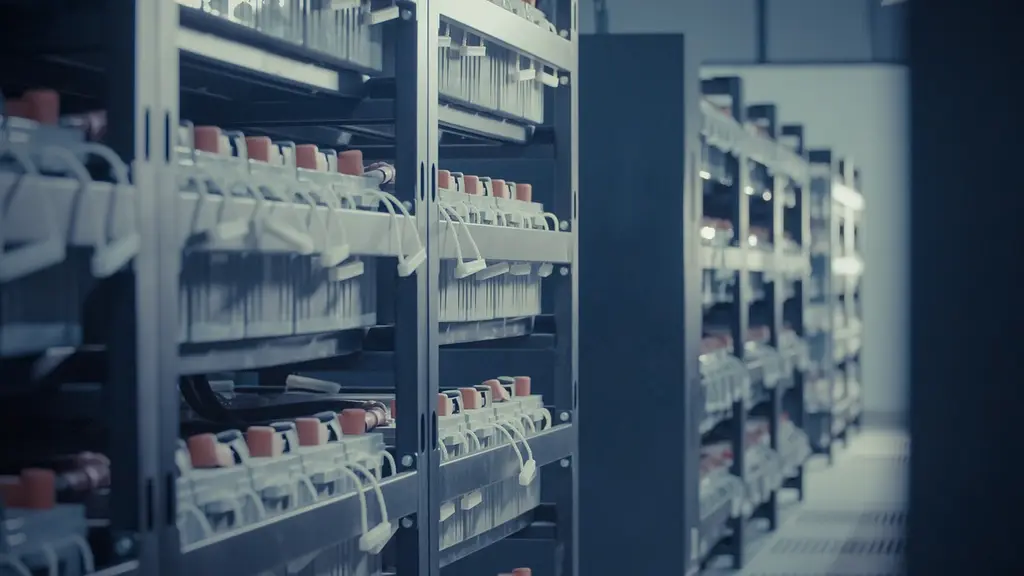
Energy research increasingly informs decisions with large consequences: grid investment plans, building regulations, subsidy schemes, net-zero pathways. Yet for a long time many of the models and datasets behind those decisions were closed. They were held by consultancies, utilities or individual research groups, and outsiders could not inspect or reproduce them.
That has been changing. Funders now require open access, journals publish data papers, and a growing set of public datasets covers everything from hourly electricity generation to smart-meter readings from thousands of buildings. This article explains why openness matters in energy research specifically, how the FAIR principles translate into practice, which kinds of open datasets exist, and the licensing and privacy questions that researchers and practitioners need to handle.
Why openness matters in energy research
In 2017, Stefan Pfenninger and colleagues argued in Energy Policy that energy research was lagging behind other fields in adopting open and reproducible practices. The paper's case still holds:
- Better science. Errors in data processing and model code are common and hard to detect without independent scrutiny.
- Less duplicated effort. Many groups have cleaned the same grid or weather data, or rebuilt similar models from scratch.
- Policy legitimacy. When models underpin public decisions, stakeholders should be able to examine the assumptions.
The authors also acknowledged real reasons for keeping data or code closed: commercial confidentiality, security, privacy, extra workload and institutional inertia. Openness is a default to depart from with good reason, not an absolute.
The FAIR principles
The FAIR Guiding Principles, published by Wilkinson and colleagues in Scientific Data in 2016, state that research data should be:
| Principle | Meaning | Practical step |
|---|---|---|
| Findable | Data have rich metadata and a globally unique, persistent identifier | Deposit in a repository that issues DOIs |
| Accessible | Data and metadata can be retrieved by their identifier using a standard protocol | Use a trusted repository; keep metadata available even if data are restricted |
| Interoperable | Data use formal, shared vocabularies and formats | Use open formats (CSV, Parquet, NetCDF) and documented units and time zones |
| Reusable | Data have clear provenance and a licence | Attach a licence, a README and a description of processing steps |
FAIR does not mean "open". Sensitive data can be FAIR if their metadata are public and access is governed by clear conditions. The principles also place particular emphasis on machine-readability, so that software can find and use data automatically.
Horizon Europe expresses the same balance in its rule that research data should be "as open as possible, as closed as necessary", alongside a requirement for immediate open access to peer-reviewed publications.
What kinds of open energy data exist?
| Domain | Examples of data | Typical sources |
|---|---|---|
| Electricity systems | Load, generation by type, cross-border flows, day-ahead prices | Transmission system operators; the ENTSO-E Transparency Platform for Europe |
| Buildings | Interval meter data, building characteristics, energy certificates | Research datasets; some public certificate registers |
| Weather and climate | Temperature, irradiance, wind; reanalysis and typical years | National meteorological services; climate reanalysis services |
| Building stock | Floor areas, ages, construction types, renovation rates | National statistics; EU building stock monitoring |
| Mobility | Charging sessions, traffic counts, public transport use | Cities, operators, research projects |
| Models and code | Energy system models, simulation engines, analysis scripts | Public code repositories with archived releases |
A widely used building dataset is the Building Data Genome Project 2, described by Miller and colleagues in Scientific Data in 2020. It contains hourly readings from 3,053 energy meters in 1,636 non-residential buildings over two full years, 2016 and 2017, covering electricity, chilled water, steam, hot water, gas, water, irrigation and solar meters. Part of it was used in the ASHRAE Great Energy Predictor III machine-learning competition. Datasets like this have become benchmarks for load forecasting, building energy benchmarking and anomaly detection.
A sense of scale
Interval data grows quickly. Consider an illustrative portfolio of 1,000 meters logged hourly for two years:
1,000 meters × 8,760 h/year × 2 years = 17,520,000 readings
At 15-minute resolution the count is four times higher, about 70 million readings. That is manageable on a laptop with the right tools, but it argues for efficient file formats, clear documentation and careful handling of daylight-saving transitions, gaps and meter resets. The same issues arise in operational settings, as discussed in monitoring energy consumption.
Licensing: the step most often skipped
Data without a licence are legally ambiguous. Potential users may not know whether they can reuse them. Common choices:
- CC BY 4.0: reuse permitted with attribution. A common default for research data and papers.
- CC0: dedication to the public domain, which maximises reuse. It is often preferred for data that will be combined with many other sources.
- Open Database Licence (ODbL): attribution plus share-alike for databases.
- Open-source software licences (for example MIT, Apache 2.0, GPL) for code. Data licences are not designed for software.
Check the terms of any source data before redistributing derived datasets. Some public portals allow viewing and analysis but restrict bulk redistribution.
Privacy and security
Energy data can be personal data. High-resolution household smart-meter readings can reveal occupancy patterns, routines and sometimes individual appliance use. In the EU, such data fall under the General Data Protection Regulation when they can be linked to a person. Practical safeguards include:
- Aggregating in time (daily or monthly rather than seconds or minutes) or across households.
- Removing or coarsening location information.
- Applying formal disclosure-control methods or synthetic data for public release.
- Using controlled-access repositories with data-use agreements for sensitive data.
Infrastructure data can also raise security concerns. Detailed network topologies or control system configurations may be withheld for good reason. City-scale data platforms face the same tensions, discussed in urban data platforms.
Persistence: what happens after the project ends
A recurring problem in energy research is the disappearing website. Project sites are often hosted on domains that lapse a few years after funding ends, taking reports, data and software with them. Persistent identifiers and trusted repositories solve much of this problem.
The papers of the FP7 project CASCADE (2011–2015), on fault detection and energy management at European airports, are an example. Six of its conference papers were deposited on Zenodo by the University of Galway under a CC BY 4.0 licence. They remain citable and retrievable through their DOIs, while the project's original website, like many, did not survive unchanged once funding ended. An independent archive of the project's public record is maintained at /cms/, and its papers are listed with their DOIs on the CASCADE publications page. For anyone running a project today, the lesson is to deposit outputs in a repository from the start rather than relying on a project website.
A checklist for sharing energy data and code
- Plan early. Write a data management plan that covers formats, metadata, licences, privacy and repository choice.
- Document thoroughly. Include units, time zone, timestamp convention (interval start or end), resolution, gaps and processing steps.
- Use open formats. CSV for simple tables; Parquet or NetCDF for large or multidimensional data.
- Choose a licence. Make it explicit in the repository record and the README.
- Deposit in a trusted repository that issues DOIs, and cite the dataset DOI in related papers.
- Archive code releases alongside data, so results can be reproduced with the exact version used.
- Protect privacy through aggregation, anonymisation or controlled access where needed, and state which approach was taken.
- Link outputs. Connect papers, datasets and code to each other and to the funding grant.
Openness is not an end in itself. It is a way of making energy research more reliable, more efficient and more useful to the people who act on it. For guidance on assessing the research that results, see how to read an energy research paper.
References
- The FAIR Guiding Principles for scientific data management and stewardship. Scientific Data
- The importance of open data and software: Is energy research lagging behind?. Energy Policy (Elsevier)
- The Building Data Genome Project 2, energy meter data from the ASHRAE Great Energy Predictor III competition. Scientific Data
- ENTSO-E Transparency Platform. ENTSO-E
- Zenodo. CERN / OpenAIRE