Electric Motorcycle Charging Infrastructure
Charging options for electric mopeds and motorcycles: removable batteries, Type 2 AC, DC fast charging and swapping, with bay design tips and timing examples.
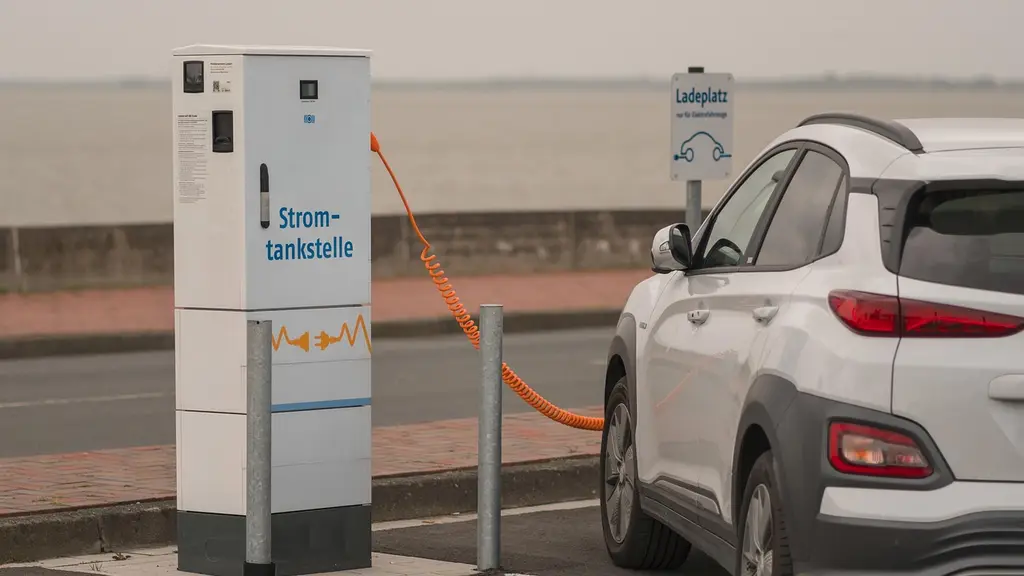
Public charging networks have been designed, almost entirely, around the electric car. That makes sense given where most of the energy goes, but it leaves a gap. Electric mopeds, scooters and motorcycles span a huge range of battery sizes and charging hardware, from a 1–2 kWh removable pack carried up to a flat, to a motorway-capable motorcycle with an on-board charger and a car-style inlet. A charging bay that works perfectly for a hatchback can be awkward, or even unusable, for a rider.
This article maps the main charging pathways for powered two-wheelers, explains which standards apply, works through charging times with simple formulas, and sets out what site owners and planners can do to make charging genuinely usable for riders.
A wide family of vehicles
"Electric motorcycle" covers several vehicle types with very different needs:
- Electric mopeds and low-speed scooters – usually small battery packs, often removable, charged from a domestic socket via an off-board charger.
- Mid-range commuter motorcycles – larger packs, sometimes still removable in modules, increasingly with an on-board charger.
- Full-size motorcycles – fixed packs with capacities that can reach into the low tens of kilowatt-hours, on-board AC chargers and, on some models, DC fast-charging inlets.
The charging solution follows from the battery architecture. A removable pack can be charged anywhere there is a socket and a safe place to put it; a fixed pack needs charging equipment at the parking space.
Five charging pathways
| Pathway | How it works | Typical power | Main standards and notes |
|---|---|---|---|
| Removable battery, off-board charger | Battery carried indoors and charged from a domestic socket | Hundreds of watts to around 1 kW | Charger and battery to manufacturer specification; certified equipment only |
| AC charging via on-board charger | Vehicle plugs into a charge point; the vehicle's own charger converts AC to DC | Limited by the on-board charger, often a few kW | IEC 61851-1 (Mode 3), Type 2 connector in Europe |
| DC fast charging | Off-board charger supplies DC directly to the battery | Tens of kW on vehicles that support it | CCS on some larger motorcycles; vehicle limits apply |
| Low-voltage DC for light EVs | Dedicated DC equipment for small vehicles | Up to the limits of the standard | IEC 62196-6 couplers (up to 120 V DC, up to 100 A) for the IEC 61851-25 interface; IEC TS 61851-3 series for double-insulated DC equipment up to 120 V |
| Battery swapping | Depleted pack exchanged for a charged one at a station | Station charges packs in the background | Interoperability depends on common pack specifications |
The last two rows are the most two-wheeler-specific. The IEC 62196-6 coupler family and the IEC TS 61851-3 series address DC charging at voltages up to 120 V, which suits many smaller vehicles whose packs operate well below car voltages. Swapping has attracted industry standardisation efforts: in 2021, Honda, KTM, Piaggio and Yamaha announced a consortium to work towards a common technical specification for swappable batteries for motorcycles and light electric vehicles.
How long does it take? A worked example
Charging time can be estimated from the energy needed, the charging power and an efficiency factor:
t (h) = Eneeded (kWh) ÷ (Pcharge (kW) × η)
Consider an illustrative motorcycle with 15 kWh of usable capacity, charged from 10% to 80%, so Eneeded = 0.70 × 15 = 10.5 kWh.
| Charging option | Assumed power | Assumed efficiency | Estimated time |
|---|---|---|---|
| On-board AC charger | 3.3 kW | 90% | ≈ 3.5 h |
| Higher-power on-board charger | 6.6 kW | 90% | ≈ 1.8 h |
| DC fast charging (average over session) | 30 kW | 95% | ≈ 22 min |
For a small scooter with 1.6 kWh of removable packs and a 600 W charger at 90% efficiency, a full charge takes about 1.6 ÷ (0.6 × 0.9) ≈ 3 h.
Two caveats apply. First, the vehicle decides: a 22 kW public AC post delivers only as much as the on-board charger accepts, so a 3.3 kW charger on a motorcycle means 3.3 kW, whatever the post is rated for. Second, charging slows as the battery approaches full, particularly with DC, so the last 20% takes disproportionately long. You can estimate session energy and cost with our battery charging cost calculator.
Designing a charging bay that riders can use
Car-oriented charging bays often fail riders for practical rather than electrical reasons. Common problems, and fixes, include:
- Cable reach and routing. Tethered cables sized for a car's inlet position may not reach a motorcycle parked across a bay, or may hang across the walkway. Untethered sockets (riders bring their own cable) or short tethered leads at low height suit two-wheelers better.
- Parking geometry. A full car bay for one motorcycle wastes space and invites enforcement problems. Dedicated two-wheeler bays beside a charge point, with a firm, level surface for side stands, work better.
- Security. Riders often carry or leave cables and helmets. Ground anchors, lockable cable holders and good lighting reduce theft risk and make longer stays practical.
- Weather protection. A canopy keeps connectors and the rider dry, and in hot climates provides shade that keeps parked batteries cooler.
- Payment and access. Under the EU Alternative Fuels Infrastructure Regulation (Regulation (EU) 2023/1804), publicly accessible charging points installed from 13 April 2024 must allow ad hoc payment with a widely used electronic payment instrument, without a contract; points of 50 kW and above need a payment card reader or contactless device, while lower-power points may use an internet-based option such as a QR code. This helps occasional users who do not hold network subscriptions.
AFIR's fleet-based deployment targets are framed around cars, vans and heavy-duty vehicles, so two-wheeler provision depends largely on local planning and site owners. Mobility hubs, workplace car parks and motorway service areas are natural candidates; see our article on mobility hubs for how charging fits into multimodal sites.
Removable batteries: infrastructure inside buildings
Removable packs move part of the infrastructure question indoors: the "charge point" becomes a flat, an office or a battery locker. Building managers should treat this like e-bike charging, with clear rules on where charging is allowed, fire separation and detection where batteries are charged in numbers, and a ban on modified or unbranded chargers. Purpose-built charging lockers can contain a fault better than open sockets. Our guide to electric bicycle infrastructure discusses fire-safe charging rooms in more detail.
Battery swapping stations take the same idea to a commercial scale. They suit fleets such as delivery services, where vehicles are in constant use and a few minutes' downtime matters more than the cost of extra packs. Their success depends on a sufficiently large user base sharing a compatible pack format, which is why common specifications matter.
Safety: Charge only with the manufacturer's charger or certified equipment matched to the battery, and have any fixed charge point installed by a qualified electrician in line with IEC 61851-1 and local wiring rules. Do not open, modify or "upgrade" a lithium-ion pack, do not charge a battery that is damaged, swollen or very hot, and avoid charging where a fire would block an escape route. More guidance is in [battery care for e-bikes and electric motorcycles](/articles/battery-care-for-light-electric-vehicles/).
Energy and grid perspective
Electric two-wheelers are among the most energy-efficient motorised road vehicles per kilometre, because of their low mass and small frontal area. Their charging demand per vehicle is therefore modest, and even DC-capable motorcycles draw far less energy per session than a car. For site owners, that means two-wheeler charging can often be added to existing car charging infrastructure with little extra grid capacity, provided the physical design accommodates riders. Where several AC points share a supply, load management can prioritise vehicles by departure time without upgrading the connection.
Action points for site owners and planners
- Survey the fleet. Find out which vehicles your users ride: removable-battery scooters and fixed-battery motorcycles need different provision.
- Offer Type 2 sockets at low height in dedicated two-wheeler bays, with secure cable storage.
- Provide a safe indoor charging option for removable batteries, ideally purpose-built lockers, designed with fire-safety advice.
- Consider swapping partnerships for fleets and high-use areas, but check pack compatibility before committing space.
- Use load management so two-wheeler and car charging can share a connection.
- Signpost clearly. Riders need to know which bays they may use, what connector is fitted and how to pay.
For the full picture of connector types and charging modes, see EV charging levels and connectors explained.
References
- IEC 62196-6:2022 – Vehicle connectors, vehicle inlets and cable assemblies for DC charging up to 120 V. International Electrotechnical Commission
- IEC TS 61851-3-1:2023 – DC EV supply equipment where protection relies on double or reinforced insulation. International Electrotechnical Commission
- IEC 61851-1:2017 – Electric vehicle conductive charging system, Part 1: General requirements. International Electrotechnical Commission
- Regulation (EU) 2023/1804 on the deployment of alternative fuels infrastructure (AFIR). EUR-Lex, Publications Office of the European Union
- Letter of intent to establish a swappable batteries consortium for motorcycles and light electric vehicles. Honda Motor Co., Ltd. (newsroom)