Airside Electrification: Ground Equipment and Aircraft Power
How electric ground support equipment, fixed 400 Hz power and pre-conditioned air replace diesel and APU use, with grid, charging and safety considerations.
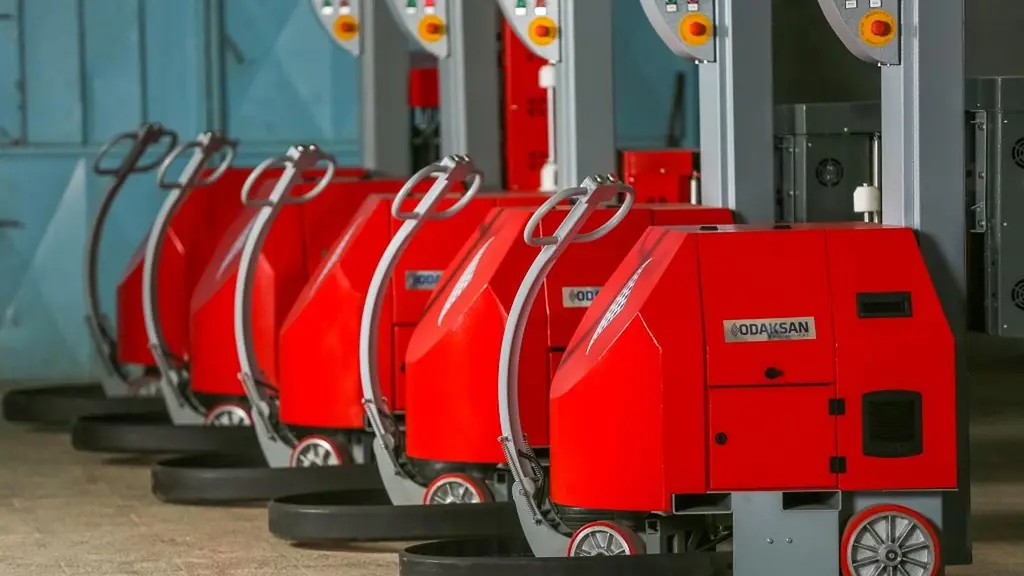
During a typical turnaround, a parked aircraft is surrounded by a small fleet of vehicles: a tug for pushback, belt loaders and baggage tractors, catering and cleaning trucks, fuel bowsers, water and waste service vehicles, passenger steps or a boarding bridge, and often a diesel ground power unit. Meanwhile, unless the aircraft is plugged into fixed ground services, its auxiliary power unit (APU), a small gas turbine in the tail, burns jet fuel to supply electricity and conditioned air.
Almost all of this can run on electricity. Electrifying ground support equipment (GSE) and replacing APU operation with fixed electrical ground power and pre-conditioned air cuts fuel use, local air pollution and noise on the apron, and moves energy supply onto a network that can be decarbonised. It also creates new challenges: charging infrastructure, grid capacity, battery safety and operational change.
This article explains the main technologies, works through the energy and emissions arithmetic of a turnaround, and sets out how airports can plan the transition.
The apron energy landscape
| Equipment | Conventional power | Electric alternative | Duty pattern |
|---|---|---|---|
| Baggage tractors | Diesel or petrol engine | Battery-electric | Many short trips; long idle periods |
| Belt loaders | Diesel engine | Battery-electric | Short, intermittent operation |
| Pushback tugs | Large diesel engine | Battery-electric; towbarless designs | High peak power, short duration |
| Passenger steps and buses | Diesel | Battery-electric | Regular, predictable cycles |
| Catering, cleaning, water and waste trucks | Diesel chassis | Electric chassis | Road-vehicle duty cycles |
| Ground power | Diesel GPU or aircraft APU | Fixed 400 Hz electrical ground power | Whole turnaround |
| Cabin conditioning | Aircraft APU | Pre-conditioned air (PCA) units | Whole turnaround, heavy in hot weather |
Battery-electric GSE suits airport work well. Vehicles travel short distances at low speeds, return to predictable parking areas, and spend much of the day idle, when combustion engines often keep running. Electric drivetrains produce no exhaust at the point of use, an important benefit for ground staff who work close to equipment for whole shifts.
Replacing the APU: fixed ground power and pre-conditioned air
Aircraft electrical systems typically run on 115/200 V three-phase alternating current at 400 Hz, a higher frequency than public grids. Fixed electrical ground power (FEGP) units convert grid supply to this format; standards such as SAE ARP5015 set the performance requirements for ground power at the aircraft receptacle. Units are commonly mounted beneath boarding bridges or in apron pits.
Pre-conditioned air units supply heated or cooled air into the cabin through a ground hose, replacing the bleed-air or electrical air conditioning that the APU would otherwise drive. In hot climates, PCA is often the larger of the two loads.
The ICAO Airport Air Quality Manual and airport practice treat fixed ground services as a key measure for reducing APU emissions. Airports that provide them generally pair the infrastructure with operating rules limiting APU running time on stand, because the infrastructure only delivers benefits if it is used.
Regulation in Europe
The EU's Alternative Fuels Infrastructure Regulation (AFIR, Regulation (EU) 2023/1804) requires airports on the trans-European transport network to provide electricity supply to stationary aircraft at all contact stands used for commercial operations by the end of 2024 and at all remote stands by the end of 2029. Member States may exempt airports with fewer than 10,000 commercial flight movements a year from the remote-stand obligation. From 2030, that electricity must come from the grid or be generated on site without fossil fuels.
Worked example: one turnaround, two ways
Consider an illustrative 45-minute turnaround of a narrowbody aircraft at a contact stand on a warm day.
With the APU running throughout:
- Assumed APU fuel burn: 110 kg/h (APU fuel burn varies widely with aircraft type and load; this value is for illustration)
- Fuel used: 110 × 0.75 = 82.5 kg of jet fuel
- CO₂ emitted: 82.5 × 3.16 ≈ 261 kg (3.16 kg of CO₂ per kg of jet fuel is the standard factor used in aviation)
With fixed ground power and PCA:
- Assumed average electrical demand: 30 kW for ground power plus 50 kW for the PCA unit, totalling 80 kW
- Electricity used: 80 × 0.75 = 60 kWh
- CO₂ at an assumed grid emission factor of 0.25 kg/kWh: about 15 kg
The fixed services cut CO₂ for this turnaround by roughly 94%, and eliminate APU combustion emissions and noise at the stand. At eight such turnarounds per day, the stand avoids about (261 − 15) × 8 × 365 ≈ 720 tonnes of CO₂ per year under these assumptions. Energy cost also falls sharply: 82.5 kg of jet fuel is around 100 litres, compared with 60 kWh of electricity.
The result is sensitive to the grid emission factor and to how long APUs actually run. Measuring APU use on stand, rather than assuming compliance with rules, is the essential first step.
Charging infrastructure and grid capacity
How much energy does an electric GSE fleet need?
Take an illustrative fleet of 60 electric baggage tractors, each using around 30 kWh per day. Daily demand is 60 × 30 = 1,800 kWh.
- If all tractors charge in a 4-hour window after the evening peak: average charging power ≈ 1,800 ÷ 4 = 450 kW
- If charging is spread across 12 hours, including opportunity charging between flight banks: average ≈ 150 kW
The same energy, delivered with load management, needs a third of the connection capacity. Add belt loaders, tugs, buses, FEGP and PCA, and the apron can become one of the largest electrical loads on the airport. Many airports find that grid connection capacity, not vehicle availability, is the binding constraint. Load management and the principles described in our article on smart charging and the grid apply directly, and on-site generation and storage can help, as discussed in airport microgrids and on-site renewables.
Where and how to charge
- Depot charging in GSE parking areas suits vehicles with predictable shift patterns.
- Opportunity charging at stands or staging areas extends range for high-utilisation vehicles.
- Shared charging pools operated by the airport can reduce duplication when several ground handlers operate on site.
- Connector and protocol choices affect interoperability; road-vehicle-derived equipment uses the charging modes and connector standards described in our guide to EV charging levels and connectors, while some industrial GSE uses dedicated charger and connector systems.
Safety: Electric GSE combines high-voltage systems with large lithium-ion battery packs. Charging equipment must be designed, installed and maintained by qualified electricians in accordance with applicable standards (for road-vehicle-type equipment, IEC 61851 for charging systems and IEC 62196 for connectors) and the manufacturer's instructions. Charging areas need a fire risk assessment covering separation distances, ventilation, detection and access for emergency services. Damaged or overheating packs must be isolated and handled only by trained personnel. Never attempt to repair or modify traction batteries outside the manufacturer's procedures. Our article on battery safety and thermal runaway explains the underlying risks.
Operational and commercial issues
Electrification is as much an organisational change as a technical one.
Ownership. GSE is often owned by ground handlers, not the airport. Airports can encourage transition through concession terms, access charges, shared charging infrastructure, or by restricting combustion equipment in certain areas over time.
Duty cycles. Pushback tugs for widebody aircraft and equipment operating in extreme cold or heat need careful specification. Battery capacity and thermal management must cover the worst realistic shift, not the average one.
Maintenance. Electric drivetrains have fewer moving parts and no engine oil, but battery health monitoring, charger maintenance and technician training become new competencies.
Data. Telematics on GSE fleets reveal utilisation, idle time and charging behaviour, often showing that fleets can be smaller than assumed.
Context: airside electrification and the wider energy system
Airside electrification shifts demand from fuels to electricity, so it interacts with every other part of the airport energy system. Terminal efficiency measures free up grid capacity for vehicles and stand services; our overview of energy efficiency in airports covers those. Historical airport energy research focused mainly on buildings: the European FP7 project CASCADE (2011–2015), for instance, studied ISO 50001-based management and fault detection for terminal HVAC at Rome Fiumicino and Milan Malpensa, and is documented in the CASCADE archive. Today's programmes increasingly have to treat buildings, vehicles and aircraft services as one integrated electrical system.
Implementation roadmap
- Baseline current fuel use by GSE type and owner, and measure APU running time on stand.
- Assess grid capacity at the airport connection and on apron distribution, including future growth.
- Prioritise quick wins: enforce use of existing FEGP and PCA; replace high-idle vehicles such as baggage tractors and belt loaders first.
- Plan charging infrastructure with load management, shared access and space for expansion.
- Address safety through fire risk assessments, training and emergency response planning.
- Align contracts with ground handlers and airlines to share costs and benefits.
- Monitor and report fuel displacement, electricity use and emissions, feeding into carbon management programmes.
Key takeaways
- Most apron equipment and aircraft ground services can be electrified with mature technology.
- Replacing APU operation with fixed ground power and pre-conditioned air can cut stand-level CO₂ dramatically, provided equipment is actually used.
- Grid capacity and load management are often the binding constraints, not vehicle technology.
- Battery safety, charging standards and fire risk assessment must be built in from the outset.
References
- Regulation (EU) 2023/1804 on the deployment of alternative fuels infrastructure (AFIR). European Union (EUR-Lex)
- Airport Infrastructure (European Aviation Environmental Report). European Union Aviation Safety Agency
- Airport Air Quality Manual (Doc 9889). International Civil Aviation Organization
- ARP5015B: Ground Equipment — 400 Hertz Ground Power Performance Requirements. SAE International
- Net Zero. Airports Council International