Sustainable Fleet Maintenance
Maintenance is an energy lever for fleets: tyres, lubricants, brakes, EV battery care and workshop energy, with a worked example of what neglect costs.
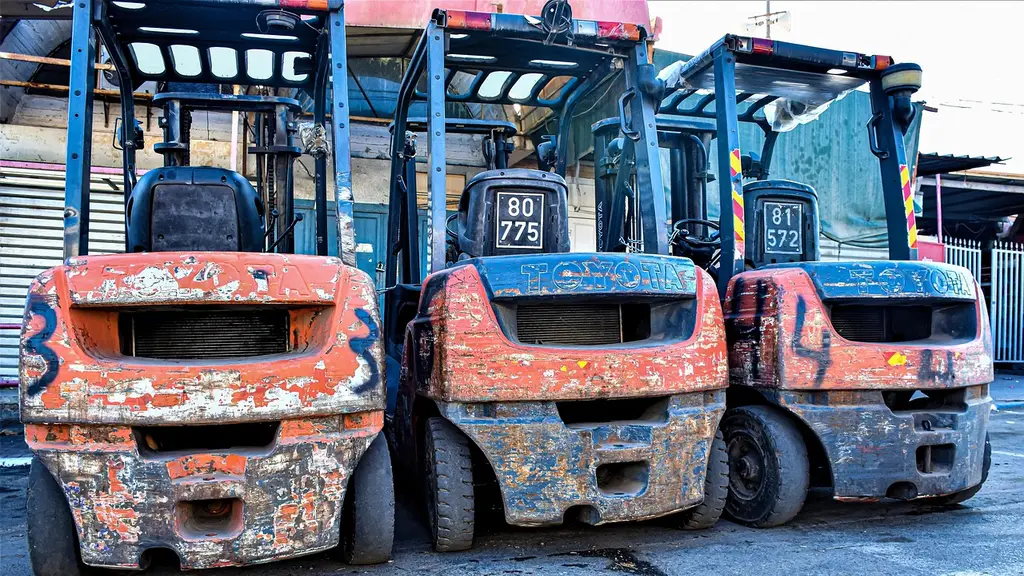
Fleet energy programmes tend to focus on the big decisions: which vehicles to buy, when to electrify, how to train drivers. Maintenance gets less attention because it looks like a cost centre rather than an efficiency measure. Yet a vehicle that leaves the yard with soft tyres, dragging brakes or the wrong oil burns more energy on every kilometre, and no driver-training programme can recover that.
This article treats maintenance as part of energy management. It covers the tasks with a measurable effect on consumption, the specific needs of battery-electric vehicles, the energy used by the workshop itself, and the circular-economy practices (retreading, re-refining, remanufacturing) that reduce the footprint of keeping a fleet running. A worked example shows how quickly small losses add up.
Where maintenance touches energy use
A vehicle's energy demand is set by rolling resistance, aerodynamic drag, inertia and drivetrain losses. Maintenance influences all of them except the vehicle's mass and shape.
| Maintenance item | Mechanism | Typical effect | Notes |
|---|---|---|---|
| Tyre pressure | Under-inflated tyres flex more, raising rolling resistance | US DOE: about 0.2% lower fuel economy per 1 psi drop in average pressure across all tyres | Checks cost minutes; automatic inflation and TPMS help |
| Wheel alignment | Misaligned wheels scrub sideways | Raises resistance and causes uneven wear | Check after kerb strikes and suspension work |
| Lubricant grade | Wrong viscosity increases friction losses | US DOE: correct grade can improve economy by 1–2% versus an incorrect one | Follow manufacturer specification, not habit |
| Brake condition | Sticking callipers or seized slide pins cause drag | Can be significant on an individual vehicle | Detectable through hub temperatures and telematics |
| Air filter (modern petrol) | Restricts airflow | US DOE: replacing a clogged filter on fuel-injected engines improves acceleration, not fuel economy | Still needed for engine health |
| Engine faults | Faulty sensors upset combustion control | Variable; may also raise pollutant emissions | Act on warning lights promptly |
| Aerodynamic fittings | Damaged side skirts, roof deflectors | Higher drag at speed (mainly trucks) | Include in walk-round checks |
Two lessons stand out. First, tyres are the single most common, most measurable and cheapest maintenance-related energy loss; our deep dive into tyres and rolling resistance covers the physics. Second, several popular "efficiency" interventions do little on modern vehicles, so a programme built on evidence rather than folklore saves money as well as energy.
A worked example: the cost of soft tyres
Consider an illustrative fleet of 50 diesel vans, each covering 30,000 km a year at 9 L/100 km.
- Annual fuel per van: 30,000 × 0.09 = 2,700 L
- Fleet total: 50 × 2,700 = 135,000 L
Suppose routine audits show tyres running on average 4 psi below the recommended pressure. Using the DOE rule of thumb of 0.2% per psi:
- Penalty: 4 × 0.2% = 0.8%
- Extra fuel: 0.008 × 135,000 ≈ 1,080 L per year
- Energy: about 10.8 MWh (at roughly 10 kWh per litre of diesel)
- CO₂: about 2.9 tonnes (at roughly 2.68 kg CO₂ per litre of fossil diesel burned)
That figure covers only fuel. Under-inflated tyres also wear faster at the shoulders, which means earlier replacement, more tyre manufacturing and more particles shed onto roads. The same arithmetic applies to electric vans: the penalty appears as kilowatt-hours and lost range rather than litres.
Battery-electric fleets change the maintenance list
Electric vehicles remove many traditional tasks, including oil changes, spark plugs, exhaust after-treatment, clutches and most belts, but they introduce new priorities.
Brakes. Regenerative braking does much of the slowing, so friction brakes wear slowly. The flip side is that discs used rarely can corrode and pads can stick, so periodic inspection and cleaning remain essential. Regulation is also paying attention to brake wear: the Euro 7 Regulation, (EU) 2024/1257, introduces the first limits on brake particle emissions, initially set at 7 mg/km for most light-duty vehicles and 3 mg/km for pure battery-electric vehicles, with implementing rules phasing in.
Tyres. Electric vehicles are typically heavier than their combustion equivalents and deliver high torque from rest, which can accelerate tyre wear. Tyre choice, rotation and pressure discipline matter even more.
Battery and thermal system. The traction battery is the most valuable component on the vehicle. Maintenance here is mostly about monitoring rather than intervention: state-of-health trends, cell balance alerts, coolant condition in liquid-cooled packs and charging patterns. Euro 7 also introduces minimum battery durability requirements for cars and vans, which makes reliable state-of-health data more important. For how packs age and how to slow it, see battery degradation and lifecycle.
Cabin climate. Heat pumps and heaters can represent a large share of winter energy use. Clean filters and correctly charged refrigerant circuits help them work efficiently.
Safety: Traction systems in electric vehicles operate at high voltage (voltage class B, above 60 V DC, under UN Regulation No 100). Only technicians with recognised high-voltage training and the correct insulated tools and procedures should work on them, following the manufacturer's isolation and verification steps. Damaged or overheating battery packs must be quarantined and handled according to the manufacturer's guidance; never open or attempt repairs on a lithium-ion pack in a general workshop.
From calendar-based to condition-based maintenance
Traditional fleet maintenance follows fixed intervals: every so many kilometres or months. Connected vehicles allow a shift towards condition-based and predictive approaches, in which data on tyre pressures, brake temperatures, fault codes, battery state of health and fuel or energy consumption trigger work when it is actually needed.
The energy benefit comes from catching gradual degradation early. A van whose consumption creeps up by 5% over two months, while its route and driver stay the same, is signalling something mechanical, such as a dragging brake, a tyre losing pressure or a sensor fault. Comparing each vehicle against its own baseline and against similar vehicles on similar duties makes these drifts visible. Our article on telematics for fleet efficiency explains the data pipeline, and the broader principles are covered in predictive maintenance explained.
The workshop is a building, too
A fleet depot workshop is often one of the least efficient buildings an organisation owns: large doors opened many times a day, high ceilings, compressed air leaks, old lighting and heating systems sized for the worst winter on record. Typical improvements include:
- Fast-acting doors and air curtains to reduce heat loss during vehicle movements.
- Radiant heating at working positions rather than heating the full air volume.
- LED high-bay lighting with occupancy and daylight controls.
- Compressed air management: fixing leaks, reducing pressure to the minimum tools need and switching off outside working hours. Our article on compressed air energy efficiency shows why leaks are often the biggest single loss.
- Sub-metering of chargers, compressors and heating so each can be managed separately.
Circular practices that cut lifecycle impact
Maintenance decisions also shape the embodied impact of a fleet.
- Retreading. Truck and bus tyre casings are designed to be retreaded, reusing the carcass and replacing the tread. A sound retreading programme depends on good casing care, which in turn depends on correct pressures.
- Re-refined lubricants. Used oil can be re-refined into base oil meeting the same specifications. Specifying approved re-refined products, where the manufacturer permits, closes a material loop.
- Remanufactured parts. Starters, alternators, turbochargers, gearboxes and increasingly electric drive components are available remanufactured with warranties.
- Battery second life and recycling. At the end of automotive service, packs may be repurposed for stationary storage or sent for material recovery. Plan the route before the first pack reaches end of life.
A practical programme
- Set a baseline. Record energy per kilometre for every vehicle, normalised by duty type.
- Make tyre checks non-negotiable. Weekly pressure checks, or TPMS alerts acted on within a shift, plus alignment checks after any impact.
- Specify correctly. Lubricants, tyres and replacement parts to the manufacturer's specification, with low-rolling-resistance tyres where duty allows.
- Use the data you already have. Flag vehicles whose consumption drifts from their own baseline.
- Train for electric fleets early. High-voltage competence takes time to build; have it in place before the vehicles arrive.
- Audit the workshop's own energy. Doors, heating, lighting, compressed air and charging.
- Close the loops. Retreading, re-refining, remanufacturing and battery end-of-life arrangements should be part of supplier contracts.
Maintenance will never be as visible as a new fleet of electric vehicles, but it is what keeps that fleet performing as specified, kilometre after kilometre.
References
- Keeping Your Vehicle in Shape. US Department of Energy / US EPA
- Regulation (EU) 2024/1257 (Euro 7). EUR-Lex, Publications Office of the European Union
- Euro 7: vehicle emissions and battery durability (summary). EUR-Lex, Publications Office of the European Union
- Regulation (EU) 2020/740 on the labelling of tyres. EUR-Lex, Publications Office of the European Union