Energy-Efficient Workshops and Small Industrial Spaces
Practical energy savings for workshops and small industrial units: heating tall spaces, door losses, motors and drives, compressed air, lighting and extraction.
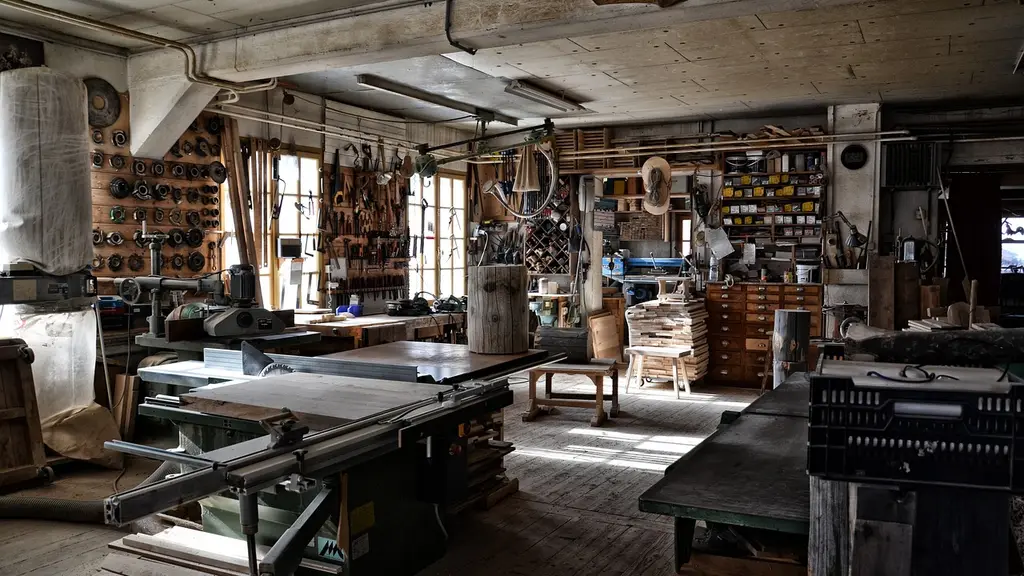
Workshops, fabrication shops, vehicle repair bays and small industrial units are some of the hardest buildings to keep efficient. They are tall, often poorly insulated, punctured by large doors that open dozens of times a day, and filled with motors, compressors and extraction systems that run longer than anyone intends. Energy is rarely the owner's main concern, and there is seldom an energy manager.
The good news is that the biggest losses in these buildings follow a handful of predictable patterns, and many fixes are cheap. This article takes each major energy use in turn, explains the physics that makes it costly, and suggests where to start. It is written for owners, maintenance staff and consultants working with small sites rather than large process plants.
Where the energy goes
Every site is different, but in a typical light-industrial unit four groups dominate: space heating (often the largest single use in cooler climates), motors driving machines, pumps, fans and extraction, compressed air, and lighting. Office areas, welfare facilities and small process loads make up the rest.
| End use | Why it is often wasteful | First thing to check |
|---|---|---|
| Space heating | Tall spaces stratify; doors and leaks dump warm air | Temperature at roof level versus floor level; door opening habits |
| Motors and machines | Idling, oversizing, fixed-speed operation | What runs during breaks and overnight |
| Compressed air | Leaks, excess pressure, inappropriate uses | Compressor running when production has stopped |
| Lighting | Old high-bay fittings, no controls, daylight ignored | Lamp type, hours, whether roof lights are clean |
| Extraction and ventilation | Running at full flow regardless of demand | Dampers on unused branches; fan control |
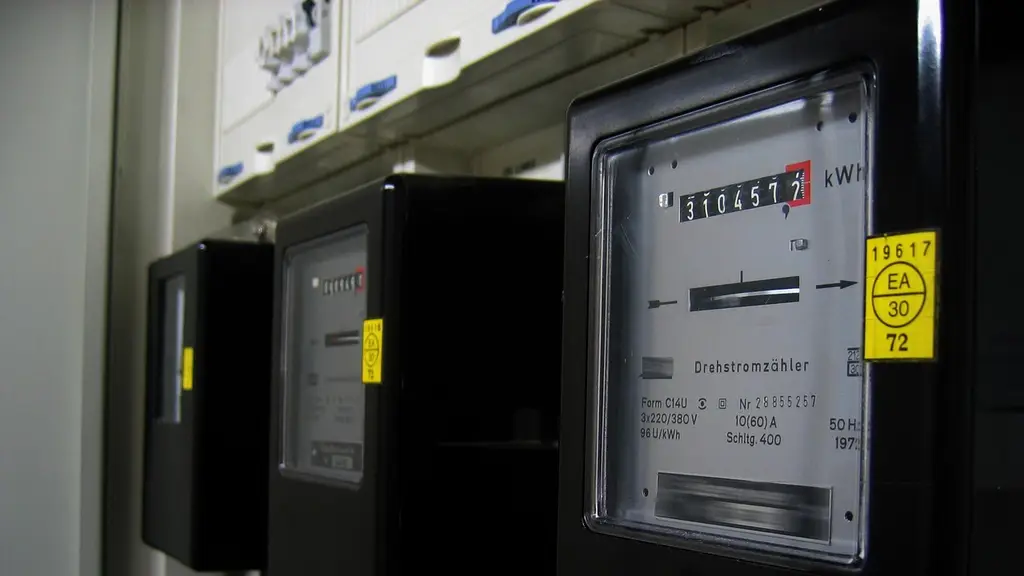
A week of half-hourly electricity data, often available from the supplier, will show the overnight and weekend base load immediately. In many small units the most striking feature is how little demand falls when the doors are locked.
Heating tall, leaky spaces
Stratification
Warm air rises. In a space with a 7 m eaves height heated by warm-air blowers, air near the roof can be much warmer than air at working level. The heater keeps running until the thermostat at head height is satisfied, while heat escapes through the roof, which is often the least insulated element.
Two approaches help. Radiant heating, whether gas-fired radiant tubes or electric or hydronic radiant panels, warms people, floors and objects directly rather than the air, so comfort can be achieved at a lower air temperature and stratification matters less. Destratification fans push warm air back down to working level and can be retrofitted to existing warm-air systems at modest cost.
Doors and air leakage
Large doors are often the single biggest heat loss. The heat needed to warm incoming outdoor air is:
Q = 0.33 × n × V × ΔT
where Q is the heat loss in watts, n the air change rate per hour, V the internal volume in m³, ΔT the indoor-outdoor temperature difference in kelvin, and 0.33 Wh/(m³·K) is the approximate volumetric heat capacity of air.
Consider an illustrative unit 30 m × 20 m × 7 m (4,200 m³). If propping a roller door open adds two air changes per hour on a day when it is 15 K colder outside:
Q = 0.33 × 2 × 4,200 × 15 ≈ 41,600 W ≈ 42 kW
That is comparable to the output of a substantial heater, poured straight out of the door. Practical responses include fast-acting doors, strip curtains for frequent pedestrian or forklift passage, door-open alarms, interlocks that switch heaters near the door off when it opens, and simply training staff to close doors. Sealing gaps around doors, roof lights and cladding joints reduces background infiltration.
Controls
Workshops often run heating on a simple time clock that nobody has adjusted in years. Check that schedules match shift patterns, that frost protection rather than full heating runs at weekends, and that thermostats sit at working height away from heaters and doors. Zoning lets a single occupied bay be heated without warming the entire building.
Motors, drives and machine idling
Electric motors are everywhere in a workshop: machine tools, conveyors, pumps, fans, extraction and compressors. Three issues recur.
Idling. Machines left running between jobs, during breaks or overnight consume energy for no output. Simple auto-off timers, interlocks and a shutdown routine at the end of each shift address this at little cost.
Fixed-speed operation of variable loads. For centrifugal fans and pumps, the affinity laws state that flow is proportional to speed and power is roughly proportional to the cube of speed:
P₂ ÷ P₁ ≈ (N₂ ÷ N₁)³
Running a fan at 80% speed therefore needs roughly 0.8³ ≈ 0.51 of full-speed power, about half, while still delivering 80% of the flow. Throttling with a damper instead wastes most of that potential. A variable-speed drive on an extraction fan or circulation pump is often one of the best-value measures in a small unit, though real savings are lower than the ideal cube law where the system must maintain a minimum pressure.
Motor efficiency. In the EU, Regulation (EU) 2019/1781 has required most new three-phase motors from 0.75 kW to 1,000 kW to reach efficiency class IE3 since July 2021, and motors from 75 kW to 200 kW to reach IE4 since July 2023. Older motors may be considerably less efficient. When a long-running motor fails, a like-for-like replacement with a higher-class motor is usually worthwhile; for low-hours motors, rewinding can make more sense, as discussed in our article on repairing versus replacing equipment.
Compressed air: the expensive utility
Compressed air is convenient, safe for many tools and easy to distribute, which is why it is so widely misused. Most of the electrical energy a compressor consumes ends up as heat rather than useful work at the tool. US Department of Energy guidance notes that leaks in poorly maintained systems can waste 20–30% of a compressor's output.
For a small site, three habits make a large difference: switch the compressor off (or isolate the distribution main) when production stops; find and fix leaks regularly; and stop using compressed air for jobs such as blowing down benches or cooling, where a brush, a low-pressure blower or a fan would do. Our dedicated guide to compressed air savings covers leak surveys, pressure reduction and heat recovery in detail.
Lighting
Older workshops often still use metal halide, sodium or fluorescent high-bay fittings. LED high-bays typically deliver the same light level with substantially less power, start instantly and dim easily, which makes controls practical. Useful additions are:
- Presence detection in stores, corridors and intermittently used bays.
- Daylight dimming near roof lights and windows; clean roof lights first, since dirty ones can lose much of their transmission.
- Task lighting at benches so that general lighting need not be set for the most demanding task.
Check that light levels remain adequate for safe working with machinery; lighting is a safety system in a workshop, not just an energy load.
Extraction and local exhaust ventilation
Dust and fume extraction protects health and must perform to its design. Within that constraint there is often scope for savings. Many systems run all branches at full flow even when only one machine is in use. Automatic blast gates that open only when the connected machine runs, combined with a variable-speed fan that maintains the required duct pressure, can cut fan energy substantially. Where extracted air is replaced by heated make-up air, the heating saving can exceed the fan saving.
Safety: Local exhaust ventilation must continue to achieve the capture velocities and airflows specified for the hazards present. Any change to extraction controls, fan speeds or ductwork should be designed and verified by a competent ventilation engineer, with testing afterwards. Electrical work on motors, drives and distribution boards must be carried out by a qualified electrician following local regulations and manufacturer guidance.
A practical sequence for a small site
- Get the data. Obtain a year of bills and, if available, interval electricity data. Note the overnight and weekend base load.
- Walk round at night and at the weekend. List everything that is running and ask why.
- Fix schedules and habits. Heating time clocks, compressor shutdown, machine idling, lighting left on.
- Tackle doors and leaks. Door discipline, strip curtains, sealing, and a compressed air leak survey.
- Target long-running motors. Variable-speed drives on fans and pumps; higher-class motors at failure.
- Upgrade lighting with controls.
- Consider the heating system at its next replacement: radiant options, zoning and, in suitable cases, heat pumps.
- Measure the results. A few sub-meters on the main loads make savings visible; our guide to sub-metering strategy suggests where to put them.
For organisations without dedicated energy staff, the lightweight approach described in energy management for small organisations helps keep these improvements from fading. And to see what a given saving is worth on your tariff, the electricity cost calculator does the arithmetic in seconds.
References
- Electric motors: energy-efficient products. European Commission
- Improving Compressed Air System Performance: A Sourcebook for Industry. US Department of Energy
- Better Buildings Solution Center. US Department of Energy
- Carbon Trust: guidance for businesses. Carbon Trust